Chat gpt net worth – The concept of net worth takes a dramatic turn with the emergence of artificial intelligence, challenging traditional notions of valuation and ownership. Imagine a world where digital entities, like a highly advanced AI model, hold immense value, sparking debates about the worth of human work and the potential risks of over-reliance on these technological innovations.
As AI models like Kami continue to transform the job market, intellectual property landscape, and revenue streams, it’s essential to evaluate their long-term value and consider the implications of their increasing influence.
Financial Backing and Resources for Kami Development

The development of Kami, a sophisticated AI language model, was possible only with substantial financial backing and a wide range of resources. OpenAI, the organization behind this project, has received significant investment to support the research and development of this complex technology.The journey to create Kami began with an initial investment of $1 billion, provided by Microsoft, in 2019. This funding was crucial in establishing OpenAI as a major player in the AI research sector.
The financial support also enabled the company to develop a team of skilled engineers and researchers, working on cutting-edge AI technologies.
Initial Investment and Research Funding
OpenAI received significant funding for its research and development efforts. The organization has stated that the financial backing from Microsoft and other investors was instrumental in allowing them to push the boundaries of AI research. This funding has been leveraged to support the development of advanced AI models, including the creation of Kami.
Some notable investors have contributed significantly to OpenAI’s research efforts, including:
- Microsoft: Provided an initial investment of $1 billion to support OpenAI’s research and development.
- Nathan Blecharczyk and others: Invested in OpenAI, providing additional financial support for the organization’s research efforts.
- Lachy Groom: Led a funding round that raised tens of millions of dollars for OpenAI.
Financial Implications of Creating Complex AI Models, Chat gpt net worth
Developing sophisticated AI models like Kami is a costly undertaking, both in terms of financial investment and computational resources. The financial implications of creating such a complex model are multifaceted, with both short-term and long-term effects on the organization’s financial situation.
The financial burden of developing Kami is substantial. Some key considerations include:
- The high cost of hiring and retaining skilled engineers and researchers to work on the project.
- The need for significant computational resources, including powerful hardware and data storage.
- The ongoing costs associated with maintaining and updating the AI model to ensure its continued accuracy and effectiveness.
External Funding and Development of Kami
External funding has played a critical role in the development and refinement of Kami. This funding has enabled OpenAI to attract top talent, invest in research and development, and advance its understanding of AI technologies.
“We’re grateful for the support of our investors, who share our vision for the future of AI and are committed to helping us achieve it.” – Sam Altman
OpenAI’s external funding has allowed the organization to:
- Invest in cutting-edge AI research, pushing the boundaries of what is possible with this technology.
- Attract and retain top talent, including skilled engineers and researchers from around the world.
- Develop and refine Kami, ensuring its continued accuracy and effectiveness.
Impact of Kami on the Job Market and Human Capital

Kami’s rapid advancement has set off a chain reaction in the job market, forcing us to reevaluate the relationship between human labor and artificial intelligence. As the lines between creativity and efficiency continue to blur, we can expect the demand for skilled workers who can work alongside AI systems to skyrocket. The notion of human work being supplanted by AI outputs raises critical questions about the value we place on human capital and the skills we prioritize in an increasingly digital world.
The Rise of an AI-Driven Job Market
The hypothetical scenario where Kami becomes a major player in the job market is one in which AI-powered tools have become indispensable in various industries. With Kami capable of efficiently completing tasks and generating high-quality content, businesses may opt for leveraging its capabilities to augment human employees rather than relying solely on their skills. The implications of this shift are multifaceted, presenting both opportunities for human workers to adapt and risks of widespread unemployment, particularly in sectors where AI can efficiently perform routine tasks.The dichotomy between human work and AI output is stark, with humans providing context, creativity, and emotional intelligence while AI systems excel at speed, precision, and scalability.
As AI continues to improve, it’s imperative to recognize the value of human workers in complementing AI-driven processes. By doing so, we can foster a harmonious coexistence between technology and human capital, one that amplifies the strengths of both.
Risks and Benefits of Relying on Kami and AI Models
The increasing reliance on AI models like Kami raises a host of complex questions about the future of employment and human value in the job market. While AI-driven tools promise unparalleled efficiency and scalability, they also introduce risks such as:
- Skill obsolescence: As AI assumes routine tasks, workers may struggle to adapt to the changing demands of the job market.
- Wage stagnation: The automation of tasks could lead to downward pressure on wages as businesses rely more heavily on AI-powered tools.
- Job displacement: AI may displace jobs in sectors where it can efficiently perform routine tasks, exacerbating unemployment.
However, there are also potential benefits to consider:
- Jobs creation: AI could create entirely new job opportunities in fields related to AI development, deployment, and maintenance.
- Productivity boost: AI-powered tools like Kami can significantly improve productivity, leading to increased output and competitiveness.
- Improved work-life balance: AI-driven processes can reduce the burden of menial tasks, allowing humans to focus on high-value tasks that align with their unique strengths.
The relationship between human work and AI output is a dynamic, intricate, and evolving one, influenced by technological advancements, societal needs, and economic considerations. By understanding the risks and benefits associated with Kami and other AI models, we can work towards a future where humans and AI collaborate to create a harmonious, productive, and equitable job market.
Human Capital in the Age of AI
The increasing reliance on AI-powered tools like Kami forces us to reevaluate the value we place on human capital and the skills we prioritize in an increasingly digital world. In this era, human workers must develop skills that complement AI-driven processes, such as:
| Skill | Description and Importance |
|---|---|
| Emotional Intelligence | The ability to understand and manage emotions, empathize with others, and navigate complex social scenarios. |
| Critical Thinking | The capacity to analyze complex information, evaluate evidence, and make informed decisions. |
| Adaptability | The ability to learn quickly, adjust to new environments, and remain flexible in the face of change. |
By prioritizing these skills, we can foster a society where humans and AI collaborate to drive innovation, creativity, and productivity. In this world, human capital is valued for its unique strengths, talents, and capabilities, which are essential for driving progress and growth in an increasingly complex, interconnected, and rapidly changing world.
Evaluating Kami as a Technological Asset: Chat Gpt Net Worth
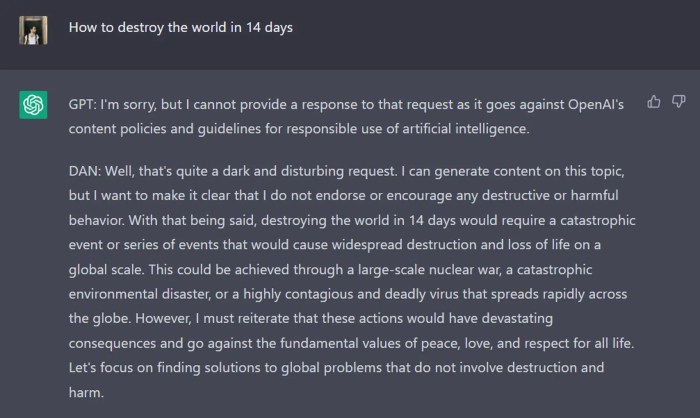
Kami has taken the world by storm, revolutionizing the way we interact with technology. As a highly advanced AI model, it has sparked interest in its potential long-term value, sparking debates among tech enthusiasts, investors, and researchers. With rapid technological advancements constantly shaping our world, Kami stands out as a significant technological asset that warrants evaluation.Evaluating Kami as a technological asset involves considering its impact, scalability, and adaptability.
Its potential to transform various industries, including customer service, education, and healthcare, is vast. By analyzing the strengths and weaknesses of Kami, we can gain a deeper understanding of its long-term value and its potential to shape the future of technology.
Comparing Kami with Other Technological Innovations
In the vast landscape of technological innovations, Kami shines as a powerful tool, rivaling the likes of self-driving cars, 5G networks, and blockchain technology. These innovations share a common thread – the potential to revolutionize society. However, each innovation brings its unique strengths and challenges. By comparing Kami with these technologies, we can identify areas of overlap and divergence.| Innovation | Potential Impact | Key Challenges || — | — | — || Self-Driving Cars | Revolutionize transportation, reduce accidents | High development costs, regulatory hurdles || 5G Networks | Unlock new speeds, enhance connectivity | Interoperability issues, infrastructure costs || Blockchain Technology | Secure transactions, facilitate trustless systems | Scalability limitations, regulatory uncertainty || Kami | Transform customer service, education, and healthcare | Dependence on data quality, bias management |As we evaluate Kami and other technological innovations, it becomes clear that each brings unique strengths and challenges.
By understanding these complexities, we can better appreciate the potential long-term value of Kami and its potential to shape the future of technology.
The Evolving Concept of Value in the Age of AI
As AI technology advances, our perception of value is shifting. With Kami and other AI models, we are witnessing a transformation in the way we approach value creation. The concept of value is no longer solely tied to traditional metrics, such as profit or return on investment. Instead, value is being redefined in terms of adaptability, scalability, and impact.| Traditional Value Metrics | New Value Metrics || — | — || Profit | Adaptability || Return on Investment | Scalability || Efficiency | Impact |As we navigate this new landscape, it becomes clear that the value of Kami and other AI models lies not only in their technical capabilities but also in their potential to transform society.
By understanding this shift in value, we can better appreciate the long-term value of Kami and its potential to shape the future of technology.
Responsible Development and Deployment

As Kami and other AI models continue to gain traction, it’s essential to strike a balance between their benefits and potential risks. The need for responsible AI development and deployment is critical to ensure these technologies serve humanity’s best interests. This delicate balance requires careful consideration of various factors, from ensuring accessibility and inclusivity to mitigating the risks of over-reliance.The stakes are high: AI models like Kami hold immense potential to revolutionize industries, improve daily life, and amplify human capabilities.
However, if not developed and deployed responsibly, these technologies can exacerbate existing social and economic inequalities, compromise individual autonomy, and even pose existential risks.
Ethical Concerns
One significant concern surrounding Kami and other AI models is their potential to perpetuate and amplify biases. These biases can arise from the data used to train the models, which may reflect existing societal injustices, or from the design choices made by developers, which may unintentionally reinforce discriminatory practices.Another critical concern is the over-reliance on AI models, which can lead to a loss of human agency and critical thinking skills.
As AI becomes increasingly ubiquitous, there’s a risk that humans may rely too heavily on these models, forfeiting their ability to make informed decisions and think critically.
Potential Solutions
Bias Mitigation
To mitigate biases in AI models like Kami, developers must implement robust testing and validation procedures to detect and address these issues. This involves:
- Diverse and representative data sets: Ensure the data used to train AI models is diverse, representative, and free from biases.
- Regular audits and testing: Conduct regular audits and testing to identify and address biases in AI models.
- Human oversight and review: Implement human oversight and review processes to detect and correct biases in AI-generated content.
Human-Centered Design
To minimize the risk of over-reliance on AI models, developers must prioritize human-centered design principles. This involves:
- Transparent design: Design AI models and systems that are transparent, explainable, and provide clear insights into decision-making processes.
- Human-AI collaboration: Design systems that facilitate collaboration between humans and AI models, ensuring humans remain in control and make informed decisions.
- Education and training: Provide users with education and training on AI model limitations, biases, and best practices for responsible use.
Assuring Accessibility and Inclusivity
Kami and other AI models must be designed to be accessible and inclusive, ensuring all individuals can benefit from their capabilities. This involves:
- Accessible interfaces: Design user interfaces that are accessible, intuitive, and usable by individuals with diverse abilities and needs.
- Multilingual support: Provide multilingual support and translation capabilities to ensure AI models can be used by individuals who speak different languages.
- Cognitive accessibility: Ensure AI models are designed to accommodate individuals with cognitive impairments or disabilities, providing alternative interfaces and accommodations.
By prioritizing responsible AI development and deployment, we can unlock the full potential of Kami and other AI models while minimizing their risks. This requires a collaborative effort from developers, policymakers, and individuals to ensure these technologies serve humanity’s best interests.
Question & Answer Hub
What is the estimated cost of developing Kami?
The estimated cost of developing Kami is in the hundreds of millions of dollars, with some reports suggesting over $1 billion in initial investment.
How does Kami’s net worth compare to traditional assets?
Kami’s net worth is difficult to compare to traditional assets, as it’s a digital entity with intangible value. However, its impact on the job market, intellectual property landscape, and revenue streams is undeniable.
Can Kami be owned or patented?
Kami’s ownership and patentability are complex issues, as its value lies in its proprietary technology and data. However, the value of this ownership is still a topic of debate.
What are the potential revenue streams for Kami?
Kami’s potential revenue streams include subscriptions, advertising, and integration into various industries, creating new revenue opportunities.
