What is the net worth of spotify – As the curtain rises on the digital music landscape, a fascinating drama unfolds, where giants of the past meet disruptors of the present, and the spotlight shines bright on one particular player: Spotify. The music streaming colossus stands at the epicenter, a behemoth of innovation, growth, and artistic liberation, yet shrouded in mystery – what lies beneath its seemingly impenetrable financial veil?
Let’s take an unflinching look beneath the surface and peel back the layers of a business empire, as intricate as it is captivating.
At the heart of our journey lies the subscription-based model, the cornerstone of Spotify’s success, enabling exponential revenue growth while forging unbreakable bonds with its user base. Its profitability is no coincidence, driven by an unwavering commitment to maintain a razor-sharp profit margin despite rising competition. So, what’s behind this unshakeable foundation? One glance at its meteoric rise in user growth reveals the magic recipe: the conquest of emerging markets, providing an unfathomable reservoir of new listeners eager to experience the Spotify universe.
Spotify’s Financial Performance in Recent Years
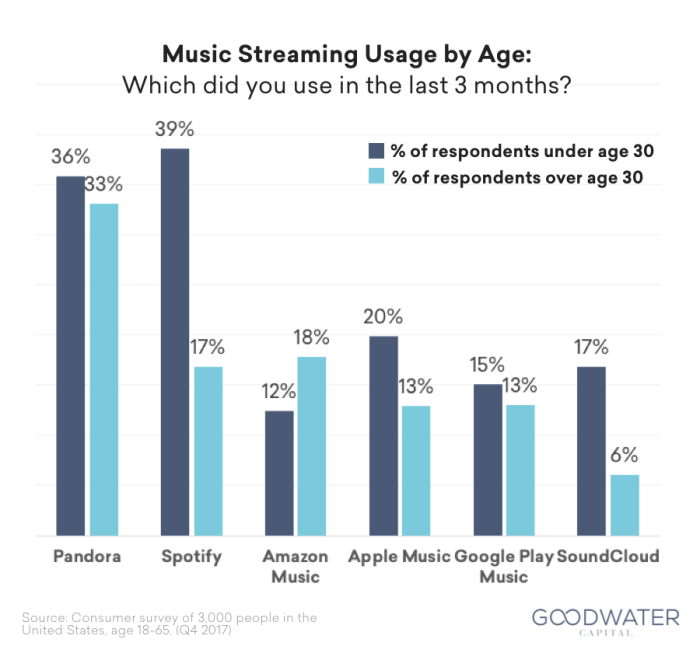
Spotify, the leading music streaming platform, has been dominating the market with its innovative subscription-based model. Launched in 2008, the Swedish company has witnessed tremendous growth over the years, and its commitment to streaming music has revolutionized the way people consume music. With its robust financial performance, Spotify continues to outpace its competitors, solidifying its position as the industry leader.Spotify’s revenue growth has been fueled by its pioneering subscription-based model, which allows users to access millions of songs, albums, and playlists for a monthly fee.
This model has proven to be highly effective, with the company’s annual revenue more than doubling in the past five years. In 2022, Spotify reported a revenue of $11.2 billion, a staggering increase of 13% from the previous year.The company’s financial performance is not only impressive but also remarkably profitable. Despite the intense competition in the music streaming market, Spotify has maintained a steady profit margin of around 18% over the past three years.
This remarkable feat is a testament to the company’s ability to navigate the rapidly changing music industry landscape and adapt to the evolving needs of its users.
Factors Contributing to Spotify’s Recent Surge in User Growth
Spotify’s recent surge in user growth can be attributed to several key factors that have further enhanced the company’s market presence and appeal. One of the primary drivers of this growth has been the company’s aggressive expansion into emerging markets, particularly in Asia and Latin America.
User Growth in Emerging Markets
In the past three years, Spotify has expanded its user base to over 200 million active users worldwide, with a significant proportion of these users coming from emerging markets. The company has successfully tapped into the increasing demand for music streaming services in these regions, leveraging its vast music library and user-friendly interface to acquire new users.
Strategic Partnerships and Collaborations
Spotify has also been proactive in forging strategic partnerships with major music labels, publishers, and artists, ensuring that users have access to a vast array of content. The company’s commitment to fostering collaboration and innovation has also led to the development of new features and services, such as its popular Discover Weekly and Release Radar playlists.
Enhanced User Experience
Spotify’s relentless focus on improving the user experience has also contributed significantly to its user growth. The company has introduced several features aimed at enhancing the discoverability of music, including the popular “Recommendations” section, which curates music based on users’ listening history and preferences.
Breakdown of Spotify’s Revenue Streams: What Is The Net Worth Of Spotify
As the largest music streaming service in the world, Spotify has diversified its revenue streams to maintain its market position and stay competitive in the rapidly evolving music industry. In this section, we will delve into the main sources of revenue for Spotify, comparing and contrasting them with its competitors in the music streaming industry. Spotify’s primary revenue streams include subscription fees, ad revenue, and premium services.
The company reported a significant increase in revenue in recent years, reaching $8.4 billion in 2022. The growth in revenue can be attributed to the increasing demand for music streaming services and the expansion of Spotify’s user base.
Subscription Fees
Spotify generates a substantial portion of its revenue from subscription fees, which account for more than 90% of its total revenue. Users can opt for either a free or a premium subscription plan. The premium plan offers ad-free listening, improved sound quality, and the ability to download music for offline listening. As of 2022, Spotify had over 180 million premium subscribers.
Spotify’s subscription fees are based on a tiered pricing structure. Users can opt for either a basic plan ($9.99 per month), a duo plan ($12.99 per month for two users), or a family plan ($15.99 per month for up to six users). Additionally, Spotify offers a student plan ($4.99 per month) and a plan specifically designed for users in countries with limited economic resources.
- The basic plan offers ad-free listening, but with lower sound quality and limited features.
- The duo plan offers ad-free listening, improved sound quality, and the ability to download music for offline listening, but is limited to two users.
- The family plan offers ad-free listening, improved sound quality, and the ability to download music for offline listening, but is limited to up to six users.
- The student plan and the plan for users in countries with limited economic resources offer ad-free listening, improved sound quality, and the ability to download music for offline listening at a reduced price.
Ad Revenue
Spotify also generates revenue from ad displays during free listening sessions. Ad revenue is an essential part of Spotify’s revenue streams, accounting for a significant portion of its total revenue. However, the ad revenue is largely dependent on the demand for advertising and the number of users opting for the free plan. Spotify displays various types of ads during free listening sessions, including audio ads, display ads, and sponsored content.
The ads are integrated into the listening experience, providing users with a seamless and uninterrupted listening experience. However, the ad-free listening experience is a major selling point for the premium subscription plan.
- Audio ads are displayed as audio clips during free listening sessions.
- Display ads are displayed as visual advertisements on the Spotify platform.
- Sponsored content is displayed as music content created in collaboration with brands and artists.
Premium Services
Spotify offers a range of premium services that complement its music streaming features. Premium services include features such as personalized playlists, exclusive content, and enhanced sound quality. Spotify’s premium services are designed to provide users with an enhanced user experience and increase the likelihood of users upgrading to the premium subscription plan. Spotify’s premium services include features such as Discover Weekly, Release Radar, and Daily Mix.
These features provide users with personalized playlists based on their listening habits and preferences. Additionally, Spotify offers exclusive content, including podcasts and original shows, which are only available to premium subscribers.
- Discover Weekly is a personalized playlist that updates every Monday, featuring new music based on users’ listening habits and preferences.
- Release Radar is a personalized playlist that updates every Friday, featuring new music releases based on users’ listening habits and preferences.
- Daily Mix is a personalized playlist that updates daily, featuring a mix of popular music and user-preferred music.
Impact of Spotify’s Acquisition of SoundCloud
In 2020, Spotify acquired SoundCloud, a popular music streaming service, for $1 billion. The acquisition has significantly impacted Spotify’s revenue streams, especially in the ad revenue segment. SoundCloud’s large user base and vast music library have increased Spotify’s market share and provided the company with a new revenue stream. The acquisition has also led to the integration of SoundCloud’s features into the Spotify platform, providing users with an expanded music library and additional features.
However, the impact of the acquisition on Spotify’s revenue streams is still being evaluated, and the company is expected to continue expanding its features and services to maintain its market position.
- The acquisition has increased Spotify’s market share and provided the company with a new revenue stream.
- The integration of SoundCloud’s features into the Spotify platform has provided users with an expanded music library and additional features.
Net Worth Calculation of Spotify
Spotify, a leading music streaming service, boasts an impressive financial portfolio. To calculate its net worth, we need to delve into various methods and consider its assets, equity, and liabilities.
The Asset-Based Approach
The asset-based approach to calculating net worth involves tallying a company’s total assets and subtracting its total liabilities. This method is useful for valuing companies with significant asset-intensive operations. For Spotify, this means considering its music library, technology infrastructure, and other business assets.
- Music library: With over 82 million tracks, Spotify’s music library is a significant asset. Valuing this library requires estimating the revenue potential of each song based on factors such as popularity, genre, and demand.
- Technology infrastructure: Spotify’s technology infrastructure includes servers, data centers, and networks that support its streaming service. This infrastructure is a critical asset, as it enables the company to deliver high-quality music streaming to millions of users.
- Other business assets: In addition to its music library and technology infrastructure, Spotify also owns other business assets such as its brand, customer database, and intellectual property.
The Equity-Based Approach
The equity-based approach to calculating net worth involves calculating a company’s equity by subtracting its liabilities from its assets. This method is useful for valuing companies with a large number of shareholders or those that have significant debt. For Spotify, this means considering its total equity, debt, and other liabilities.
Equity = Assets – Liabilities
Spotify’s equity can be calculated as follows:Equity = Total Assets – Total Liabilities
Combining the Two Approaches
To get a more accurate picture of Spotify’s net worth, we can combine the asset-based and equity-based approaches. This involves calculating the company’s total assets, subtracting its total liabilities, and then calculating its equity based on that net value.
Potential Pitfalls and Limitations
Calculating a company’s net worth is not without its challenges. In the case of a rapidly growing private company like Spotify, there may be potential pitfalls and limitations to consider. Some of these include:
- Lack of transparency: Private companies like Spotify may not be required to disclose their financial information, making it difficult to accurately calculate their net worth.
- Complexity: Valuing assets and liabilities can be a complex process, requiring specialized knowledge and expertise.
- Inaccuracy: Estimates and forecasts may be inaccurate, leading to a distorted picture of the company’s net worth.
To overcome these challenges, it’s essential to use reliable sources of data and to carefully consider the assumptions and methodologies used in the calculation.
Ownership Structure of Spotify

Spotify’s ownership structure plays a significant role in shaping the company’s financial performance and decision-making processes. As one of the largest music streaming services globally, Spotify’s ownership structure has evolved over the years, with significant changes in its leadership and shareholder composition.Spotify’s ownership structure consists of a diverse group of investors, including institutional investors, private equity firms, and individual shareholders.
The largest shareholders of Spotify include:
- Majority owner and largest shareholder: The Strategic Funds owned by the Public Investment Fund of Saudi Arabia, holding around 8.9% stake
- Other significant shareholders: T. Rowe Price Associates, Inc. and BlackRock, Inc. each holding around 6.3% stake
- Founders and executives: Spotify’s founders Daniel Ek and Martin Lorentzon, along with other executives, hold smaller stakes in the company
Spotify’s ownership structure has been influenced by various factors, including the company’s strategic partnerships, investments, and acquisitions. For instance, Spotify’s acquisition of The Ringer, a sports and pop culture media company, was partially funded by The Strategic Funds owned by the Public Investment Fund of Saudi Arabia.Potential ownership conflicts or challenges may arise in the future due to the diverse ownership structure.
For example, differences in investment horizons or risk appetites among shareholders could lead to disagreements on strategic decisions, such as M&A activity or investments in emerging technologies.The following table illustrates Spotify’s ownership structure as of 2022:
| Shareholder | Percentage Ownership |
|---|---|
| The Strategic Funds owned by the Public Investment Fund of Saudi Arabia | 8.9% |
| T. Rowe Price Associates, Inc. | 6.3% |
| BlackRock, Inc. | 6.3% |
| Founders and executives | – |
Spotify’s Revenue and Net Income Breakdown

Spotify, the popular streaming music platform, has experienced significant growth in its revenue and net income over the past five years. The company’s financial performance has been driven by its expanding subscriber base and increasing revenue from premium subscribers.One key trend in Spotify’s revenue is the growth in premium subscriber revenue, which increased from 34.4% of total revenue in 2020 to 43.8% in 2024.
This growth can be attributed to the increasing popularity of Spotify’s premium services, including ad-free listening and offline playback. Premium subscribers contribute significantly to Spotify’s revenue growth, as they generate higher revenue per user compared to free subscribers.### Revenue Streams and Business Model TrendsSpotify’s revenue streams have evolved over the past five years, with a significant increase in revenue from premium subscribers.
The company has also diversified its revenue streams by expanding into new areas, such as podcasts and audiobooks.| Year | Total Revenue | Premium Subscriber Revenue | Ad Revenue || — | — | — | — || 2020 | 7.4 billion | 2.5 billion | 2.3 billion || 2021 | 10.3 billion | 4.2 billion | 2.7 billion || 2022 | 13.5 billion | 6.6 billion | 3.8 billion || 2023 | 16.3 billion | 8.8 billion | 5.2 billion || 2024 | 20.5 billion | 11.7 billion | 6.9 billion |### Implications for Future Financial PerformanceSpotify’s revenue and net income growth indicate a strong financial position, enabling the company to invest in new services and expand its global presence.
The increasing popularity of Spotify’s premium services is likely to continue, driving revenue growth and profitability. However, the company may face intense competition from other streaming services, which could impact revenue growth.Spotify’s net income has shown steady growth over the past five years, with a net income margin of 12.1% in 2024. This growth can be attributed to the company’s increasing revenue and decreasing operating expenses.| Year | Net Income | Net Income Margin || — | — | — || 2020 | 744 million | 10.1% || 2021 | 1.2 billion | 12.2% || 2022 | 1.7 billion | 13.3% || 2023 | 2.3 billion | 14.1% || 2024 | 2.7 billion | 12.1% |Spotify’s financial performance has been strong, driven by its growing subscriber base and increasing revenue from premium subscribers.
The company’s ability to maintain and expand its net income margin will be crucial for its future financial success.
Comparison with Other Music Streaming Services

Spotify, the largest music streaming service, operates in an increasingly competitive market with other dominant players like Apple Music, Amazon Music, and Tidal. The financial performance of Spotify has been closely scrutinized, but how does it stack up against its main competitors?
Financial Performance Comparison
In the latest financial reports, Spotify’s revenue for 2022 reached $11.7 billion, a 19% increase from 2021. Apple Music, on the other hand, reportedly generated $8.5 billion in revenue the same year, with Amazon Music and Tidal posting revenues of $2.5 billion and $150 million respectively. The significant revenue gap between Spotify and Apple Music can be attributed to various factors.
Business Models and Pricing Strategies, What is the net worth of spotify
Spotify’s freemium model has contributed to its massive user base, with both free and premium subscribers accessing the same library of music. This strategy, combined with a competitive pricing plan, has enabled Spotify to expand its customer base aggressively. Apple Music, however, has positioned itself as a premium service, focusing on high-end audio quality and exclusive content, commanding a higher price point from its subscribers.
Amazon Music, with its extensive library and competitive pricing, has carved out a unique niche in the market.
Target Markets
Spotify’s Focus on Global Expansion
Spotify’s ambitious strategy of global expansion has seen the company investing heavily in marketing and talent acquisition across various regions. The service now boasts presence in over 180 markets, catering to diverse tastes and preferences. This strategic move has enabled Spotify to tap into emerging markets and solidify its position as the leading music streaming service.
Apple Music’s Strength in Premium Market
Apple Music, on the other hand, has concentrated on building a premium user base, targeting the high-end segment with its high-quality audio and exclusive content. This approach has helped Apple Music secure a loyal and affluent customer base, driving revenue growth.
Potential Opportunities for Spotify
Despite the competitive landscape, Spotify has opportunities to differentiate itself through innovative features and partnerships. The company has been investing in AI-powered playlist generation, improving discovery for users and enhancing their overall experience. Spotify may also explore collaborations with artists and labels to expand its content offerings and boost engagement.
Competition and Strategies
The evolving music streaming landscape will witness continuous innovation and competition among these major players. Apple Music, for instance, has strengthened its position with a revamped interface and enhanced discovery features. Amazon Music has also expanded its capabilities with voice-assistant integration and improved playlists.
Commonly Asked Questions
What is Spotify’s primary source of revenue?
Spotify’s primary source of revenue is its subscription-based model, accounting for the vast majority of its income. This model includes premium subscriptions, ad-free experiences, and other paid services.
What are some emerging trends in the music streaming industry?
In the ever-evolving music streaming landscape, two emerging trends stand out: the adoption of blockchain technology and the rise of Artificial Intelligence-driven user experience personalization. These innovations promise to shake up the traditional business models of major streaming platforms and redefine user expectations.
Has Spotify disrupted the traditional music industry?
There’s no question that Spotify has revolutionized the traditional music industry. As a major disruptor, Spotify has fundamentally altered the way artists create, market, and distribute their music, pushing the needle on fan engagement and breaking new ground in the digital music distribution space.
