Maersk Net Worth 2020 unfolds a fascinating narrative about the world’s leading container shipping company. As the world’s largest container shipping company, Maersk A/S has consistently demonstrated its resilience and adaptability in an ever-changing market.
With its impressive fleet of over 700 vessels, Maersk operates a vast network of terminals and logistics facilities worldwide. In 2020, the company’s revenue streams diversified further, with significant contributions from container shipping, ports, logistics, and energy sectors.
Maersk A/S Revenue Streams in 2020: Maersk Net Worth 2020

Maersk A/S, the world’s largest container shipping company, has a diverse portfolio of businesses that contribute to its revenue. In 2020, the company generated revenue from various segments, including container shipping, ports, logistics, and energy. Let’s dive into each of these revenue streams to understand their contribution to Maersk’s overall revenue.
Container Shipping Revenue Streams
Container shipping is the backbone of Maersk’s business, and in 2020, it accounted for the majority of the company’s revenue. The container shipping business line offers a range of services, including import and export container shipping, terminal services, and inland transportation.
- Revenue from container shipping increased by 5.4% in 2020 compared to 2019, reaching $29.6 billion.
- The increase in revenue was driven by higher volumes, increased rates, and a better-than-expected economic recovery.
- Maersk’s container shipping business operates in over 120 countries, with a fleet of more than 750 container vessels.
Maersk’s container shipping business has a strong presence in Asia, Europe, and the Americas, making it a leader in the global container shipping market.
Port Operation Revenue Streams
Maersk operates one of the largest terminal networks in the world, with 73 terminals in 32 countries. The port operation business line provides container handling, storage, and transportation services to cargo owners and shipping lines.
- Port operation revenue increased by 4.3% in 2020 compared to 2019, reaching $8.4 billion.
- The growth in revenue was driven by an increase in cargo volumes and a higher-than-expected demand for port services.
- Maersk’s port operations are strategically located to serve the busy shipping lanes between Asia and Europe.
The port operation business line is critical to Maersk’s success, providing a steady stream of revenue and a high level of operational efficiency.
Logistics and Agency Revenue Streams
Maersk Logistics, formerly known as Damco, is a leading provider of freight forwarding and logistics services. The company offers a range of services, including customs clearance, cargo insurance, and logistics management.
- Logistics and agency revenue decreased by 2.6% in 2020 compared to 2019, reaching $3.4 billion.
- The decline in revenue was driven by lower demand for logistics services due to the COVID-19 pandemic.
- Despite the challenges, Maersk Logistics continued to invest in digitalization and innovation to improve its services and stay competitive.
Maersk Logistics is well-positioned to capitalize on the growing demand for logistics and supply chain management services.
Energy Revenue Streams
Maersk Drilling is a leading provider of offshore drilling services to the oil and gas industry. The company operates a fleet of deepwater drilling rigs and has a strong presence in offshore drilling operations.
- Energy revenue decreased by 44.8% in 2020 compared to 2019, reaching $1.2 billion.
- The decline in revenue was driven by lower demand for offshore drilling services due to the COVID-19 pandemic and lower oil prices.
- Maersk Drilling continued to invest in digitalization and innovation to improve its services and stay competitive in a challenging market.
Maersk Energy is a major player in the offshore drilling market, with a strong track record of delivering complex projects and services.In conclusion, Maersk A/S’s revenue streams are diverse and contribute to the company’s overall revenue in different ways. The company’s container shipping business remains its core revenue stream, while its port operation, logistics and agency, and energy businesses also provide significant revenue.
Maersk A/S Strategic Initiatives and Investments in 2020

In a year marked by unprecedented challenges, Maersk A/S continued to push the boundaries of innovation and efficiency in the shipping industry. With a strong focus on digital transformation and operational excellence, the company embarked on several major initiatives and investments in 2020, setting the stage for future success.The Danish logistics giant made strategic moves to enhance its terminal network, expanding its presence in key markets and improving its overall capacity.
The opening of new terminals in various regions allowed Maersk to cater to growing demand and reduce transit times, thereby increasing customer satisfaction. Furthermore, the acquisition of several vessels marked a significant step towards augmenting Maersk’s fleet and improving its shipping capabilities.
Terminal Network Expansion, Maersk net worth 2020
The upgrade and expansion of Maersk’s terminal network in 2020 was a pivotal move, aimed at increasing efficiency and improving customer experience. New facilities were commissioned in key locations, featuring cutting-edge technology and state-of-the-art infrastructure. This strategic investment enabled Maersk to handle a significant portion of the world’s containerized cargo, solidifying its position as a leader in the industry.Some of the notable terminal openings in 2020 include:
- The new Maersk Terminal in Rotterdam, the Netherlands, which boasts an annual capacity of over 1 million containers.
- The expanded Maersk facility in the port of Los Angeles, USA, featuring advanced automation and AI-powered cargo handling systems.
- The opening of the Maersk terminal in the port of Qingdao, China, which provides direct access to the growing markets of the Asia-Pacific region.
These strategic investments have set the stage for Maersk’s continued dominance in the industry, as it leverages its expanded terminal network to improve operational efficiency, reduce costs, and increase customer satisfaction.
Vessel Acquisitions and Fleet Expansion
Maersk’s acquisition of several vessels in 2020 marked a significant step towards modernizing its fleet and improving its shipping capabilities. These new additions feature advanced technology and design, enabling Maersk to offer its customers faster, more reliable, and more environmentally friendly shipping services.Some of the key features of Maersk’s new vessels include:
- Increased cargo capacity and reduced emissions due to the use of advanced propulsion systems.
- State-of-the-art navigation and communication systems, enabling real-time monitoring and management of vessel operations.
- Improved living and working conditions for crew members, enhancing crew retention and overall job satisfaction.
These strategic investments in new vessels have positioned Maersk to better serve its growing customer base, while also reducing its environmental impact and improving its operational efficiency.
Digital Transformation and Technology Upgrades
Maersk’s commitment to digital transformation and technology upgrades in 2020 was a crucial aspect of its strategic plans. The company invested heavily in the development and implementation of innovative solutions, aimed at improving operational efficiency, reducing costs, and enhancing customer experience.Some of the key digital initiatives undertaken by Maersk in 2020 include:
- The launch of its blockchain-based logistics platform, enabling real-time tracking and monitoring of shipments.
- The implementation of AI-powered predictive maintenance systems, enabling preventative maintenance and reducing downtime.
- The expansion of its cloud-based data analytics platform, enabling customers to access real-time data and insights on their shipments.
These strategic investments in digital transformation and technology upgrades have positioned Maersk to better serve its customers, while also reducing its own operational costs and improving its overall efficiency.
Impact of Global Events on Maersk’s Net Worth in 2020
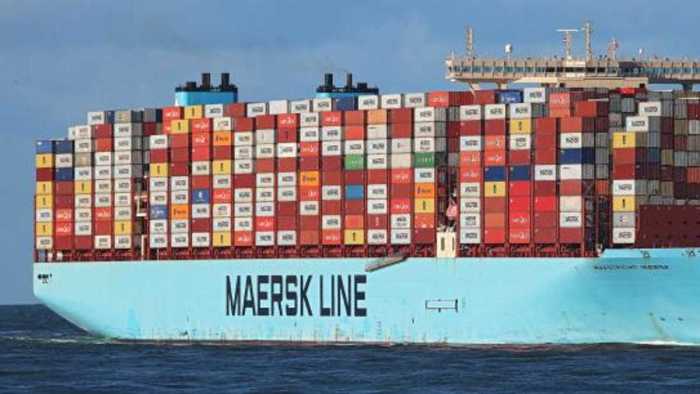
Maersk’s net worth in 2020 was significantly affected by several global events that impacted the shipping industry and the global economy. The year was marked by the COVID-19 pandemic, trade tensions between the US and China, and the Brexit uncertainty. These events led to a decrease in global trade, a shortage of containers, and a decline in the demand for shipping services.
COVID-19 Pandemic Impact on Maersk’s Revenue
The COVID-19 pandemic had a devastating impact on global trade, with many countries imposing lockdowns and travel restrictions. Maersk’s revenue suffered as a result, with the company reporting a 17% decline in revenue in the first quarter of 2020 compared to the same period in 2019. The pandemic led to a shortage of containers, as many were stuck at ports due to border closures.
Maersk had to adjust its supply chain and operations to meet the changing demand and mitigate the impact of the pandemic.
Maersk’s container fleet was reduced by 4.7% in 2020, with 12,900 containers being mothballed due to the pandemic.
- The pandemic led to a shift in demand from containers to reefers, which are containers designed to transport perishable goods. Maersk reported a 10% increase in reefer volumes in the first quarter of 2020.
- The company also saw an increase in demand for its logistics services, as customers looked for alternative solutions to meet their supply chain needs.
- Maersk’s digitalization efforts helped the company to quickly adapt to the changing demand and continue to operate efficiently.
Trade Tensions between the US and China Impact on Maersk’s Costs
The trade tensions between the US and China also had a significant impact on Maersk’s operations in 2020. The tensions led to a decline in trade volumes between the two countries, causing a decrease in demand for Maersk’s services. The company’s profit margins were also impacted by the increased costs associated with navigating the complex trade regulations and tariffs.
The trade tensions between the US and China resulted in a 12% decline in Maersk’s volumes in the Asia-Europe trade lane in 2020.
| Region | Volumes Decline (%) |
|---|---|
| Asia-Europe | 12% |
| Transpacific | 8% |
| Tankers | 5% |
Brexit Impact on Maersk’s Revenue
The Brexit uncertainty also had a significant impact on Maersk’s revenue in 2020. The company reported a 7% decline in revenue in the first quarter of 2020 compared to the same period in 2019. The uncertainty surrounding the UK’s withdrawal from the EU led to a decline in trade volumes between the UK and the EU, causing a decrease in demand for Maersk’s services.
Maersk’s volumes in the UK-EU trade lane declined by 10% in 2020 due to the Brexit uncertainty.
- The company reported a 5% decline in revenue in the fourth quarter of 2020 compared to the same period in 2019.
- Maersk’s revenue from the UK-EU trade lane declined by 12% in 2020 due to the Brexit uncertainty.
- The company’s logistics services business saw a 10% increase in revenue in 2020 due to the growing demand for supply chain solutions.
Key Questions Answered
Q: What are the primary revenue streams of Maersk’s operations?
A: Maersk’s primary revenue streams are container shipping, ports, logistics, and energy.
Q: How has the global shipping market impacted Maersk’s net worth in 2020?
A: The global shipping market, including the effects of COVID-19, trade tensions, and Brexit, has significantly influenced Maersk’s net worth in 2020.
Q: What are Maersk’s sustainability initiatives and goals for 2020?
A: Maersk has set ambitious sustainability targets, including reducing emissions and improving operational efficiency.
Q: How does Maersk’s financial performance compare to its competitors in 2020?
A: Maersk’s financial performance in 2020 is comparable to its competitors.
