Bette Davis Net Worth when she Died Estimated. The legendary actress’s life was a tale of both triumph and tumult, marked by periods of immense wealth and devastating financial struggles.
Born Ruth Elizabeth Davis on April 5, 1908, in Lowell, Massachusetts, Bette Davis’s early life was far removed from the spotlight she would eventually shine in. Her mother, Ruthie, was a homemaker, and her father, Harlow Morrell Davis, was a lawyer. The family’s financial struggles would later be etched in the actress’s psyche, shaping her relentless drive for success.
Bette Davis’s Net Worth at the Height of Her Career

Bette Davis was a true Hollywood icon, known for her versatility and talent on the silver screen. With a career spanning over five decades, she left an indelible mark on the film industry. At the height of her career, Davis’s net worth soared, thanks to her lucrative film contracts, high-end properties, and savvy business dealings.During the 1930s and 1940s, Davis was one of the highest-paid actresses in Hollywood.
Her salary for films like “Jezebel” (1938) and “All This, and Heaven Too” (1940) ranged from $150,000 to $200,000 per picture, equivalent to approximately $2.5 million to $3.5 million today. Her successful film projects, such as “Dark Victory” (1939) and “Now, Voyager” (1942), not only brought her critical acclaim but also significant financial rewards.
Luxurious Lifestyle and Properties, Bette davis net worth when she died
Davis’s wealth was also reflected in her luxurious lifestyle. She owned a beautiful Beverly Hills mansion, which was adorned with priceless artwork and antiques. The property, known as the “Bette Davis Estate,” boasted an impressive collection of rare gems, including a 10-carat diamond necklace. Her lavish lifestyle was often documented in the press, showcasing her exquisite taste in fashion, decor, and architecture.
Marriage and Divorce: Financial Consequences
Davis’s personal life was also a significant factor in her financial fortune. Her marriage to actor Gary Merrill in 1940 provided her with a steady income and increased her net worth. However, the couple’s tumultuous relationship ended in a messy divorce in 1960. The divorce settlement saw Davis walk away with a significant sum, reportedly around $350,000, equivalent to approximately $3 million today.
Nevertheless, the costly and acrimonious divorce proceedings weighed heavily on her finances, leading to a decline in her net worth towards the end of her life.Davis’s divorce also had significant tax implications. She was forced to pay a hefty sum to the IRS, which further depleted her financial resources. The actress’s financial struggles were evident in the late 1960s, as she began to take on more commercial film roles to make ends meet.
Despite her declining net worth, Davis continued to act throughout her life, leaving behind a legacy that endured long after her passing.
Notable Film Projects and Salary Highlights
Some of Davis’s most notable film projects and their corresponding salaries include:* “Jezebel” (1938)
- $150,000
- “All This, and Heaven Too” (1940)
- $200,000
- “Dark Victory” (1939)
- $175,000
- “Now, Voyager” (1942)
- $250,000
- “Beyond the Forest” (1949)
- $300,000
- “Mr. Skeffington” (1944)
- $225,000
These figures demonstrate Davis’s growing success and financial rewards as a leading lady in Hollywood during the 1930s and 1940s. Her talent, dedication, and savvy business acumen made her one of the highest-paid and most in-demand actresses of her time, securing her place as a true Hollywood legend.
Court Cases and Tax Implications
Davis’s divorce settlement and subsequent tax troubles were a significant blow to her finances. In 1961, she was sued by her former husband Gary Merrill for $50,000, which was eventually settled out of court. Additionally, Davis was forced to pay a hefty sum to the IRS, which further depleted her financial resources.Davis’s financial struggles were compounded by her decision to move to Europe in the late 1960s.
While the move allowed her to escape the tax implications of her American wealth, it also limited her access to financial opportunities, contributing to her declining net worth.Davis’s legacy extends far beyond her financial achievements. Her talent, dedication, and perseverance paved the way for future generations of actresses, inspiring millions with her unforgettable performances and timeless style.
Bette Davis’s Financial Involvement in Television and Film Production

Bette Davis’s financial involvement in television and film production was a significant aspect of her career, marking a shift towards a more entrepreneurial approach. This was evident in her efforts to create her own television and film projects, showcasing her talent not only as an actress but also as a producer.Throughout her career, Davis was known for her fierce independence and business acumen.
She often found herself at odds with the Hollywood studios, pushing for better salaries and working conditions. As a result, she began to explore alternative avenues for creative control and financial gain. This led her to invest in various television and film projects, both on-screen and behind the camera.
Notable Successes and Failures
Davis’s venture into television production culminated in the creation of the television show ‘Hush’, which was loosely based on her own life. The show premiered in 1956 and starred Davis’s protégée, Joanne Dru. While ‘Hush’ initially received positive reviews, its ratings faltered, and the show was eventually canceled after a short run. This marked one of Davis’s rare missteps in television production.One notable success was her involvement in the film ‘Storm Center’, released in 1956.
Davis produced, starred in, and campaigned for the film, which received critical acclaim. She used her platform to raise awareness about the importance of freedom of speech and the dangers of censorship. This marked a significant moment in her career, as she continued to assert her influence in the industry.
TV Show ‘Hush’)
In 1956, Davis produced and starred in the television series ‘Hush’, which followed the story of a young actress struggling to maintain her sanity and identity in the face of Hollywood’s pressures. Based on her own life experiences, the show offered a poignant portrayal of Davis’s inner struggles and personal triumphs.
- ‘Hush’ was cancelled relatively quickly after its premiere, citing low ratings.
- The show’s failure served as a wake-up call for Davis, leading her to re-evaluate her approach to television production.
- Despite its short run, ‘Hush’ remains a notable example of Davis’s foray into television and a testament to her pioneering spirit.
- The show’s exploration of themes such as identity, sanity, and the pressures of fame continue to resonate with audiences today.
Davis’s financial involvement in ‘Hush’ was substantial, as she invested her own money in the production. Unfortunately, the show’s failure resulted in significant financial losses for Davis. This experience taught her the importance of carefully assessing risks and weighing the potential returns on investment before embarking on new ventures.Davis’s experiences with ‘Hush’ showcased her willingness to take calculated risks and her resilience in the face of failure.
Despite its setbacks, Davis emerged from this experience with a newfound sense of purpose and a deeper understanding of the complexities of television production. This knowledge helped shape her future decisions as a producer and actor, solidifying her status as a Hollywood legend.
Bette Davis’s Personal Spending Habits and High-Profile Divorce: Bette Davis Net Worth When She Died
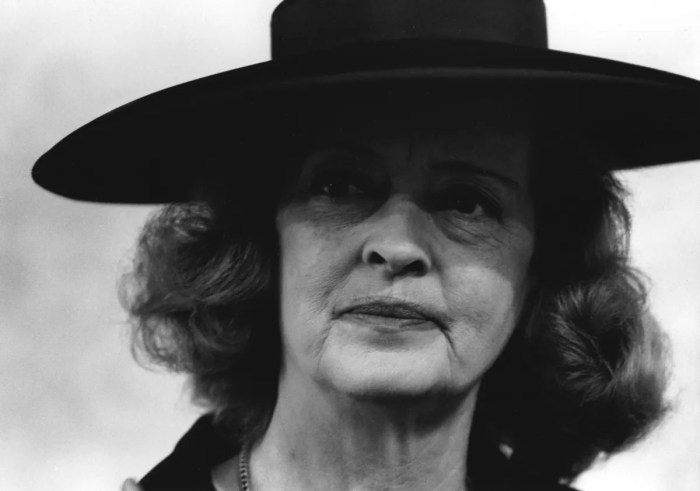
Bette Davis, the legendary actress known for her fierce on-screen presence, had a lavish lifestyle that rivaled her Hollywood star status. Her love for luxury items and exotic travel was legendary, and she spent freely, often leaving her financial advisors in a state of bewilderment. As we delve into her personal spending habits and high-profile divorce from her fourth husband, Gary Merrill, we’ll uncover a tale of grandeur, drama, and financial instability.
The Prolific Spending Habits of Bette Davis
Bette Davis had an insatiable appetite for the finer things in life. Her personal expenses, though largely unreported, are said to have rivaled the costs of producing a major Hollywood film. Her love for luxury items, including bespoke gowns, rare artwork, and custom-designed homes, took a significant toll on her finances. Her penchant for high-stakes travel, often accompanied by her coterie of friends and advisors, further drained her bank account.
Davis’s spending habits were so voracious that her financial team would often plead with her to scale back, only to be met with a resolute “I’ll be fine” response.
The Divorce Saga with Gary Merrill
Bette Davis’s divorce from Gary Merrill, her fourth husband, was a drawn-out and contentious affair. The couple’s marriage was marked by periods of intense passion and explosive disagreements, culminating in a prolonged court battle over the division of their assets. As the divorce proceedings raged on, Davis’s financial situation took a devastating hit. She claimed that Merrill was hiding assets and manipulating the court to sway the outcome in his favor.
Merrill, on the other hand, accused Davis of recklessly overspending and sabotaging their joint efforts to maintain a semblance of financial stability. The divorce ultimately ended in a financial settlement that left Davis with significantly reduced assets and a crippling debt burden.
The Financial Fallout of Her Divorce
The divorce from Gary Merrill left Bette Davis financially reeling. Her once-significant net worth had dwindled precipitously, and she was forced to confront the reality of her own financial recklessness. In 1979, Davis claimed, “My divorce from Gary Merrill has been a terrible experience…I lost everything I had.” Her financial advisors estimated that the divorce settlement had reduced her net worth by at least $5 million, a staggering blow to an actress known for her fierce independence and high-society status.
Bette Davis’s Financial Legacy and Estate

As Bette Davis’s life came to a close, her extensive estate and legacy required careful handling. The settlement of her financial affairs involved not only her immediate family but also a complex web of interests, including taxes, wills, and charitable bequests. Despite the challenges, her financial legacy endures as a testament to her remarkable career and entrepreneurial spirit.The settlement of Bette Davis’s estate began with the preparation of her will, which was executed on April 14, 1989, just one month before her death.
Her will named her lawyer, Warren Caro, as the executor and specified various bequests to family members, friends, and charitable organizations. One notable inheritance was her extensive collection of jewelry, artwork, and memorabilia, which was divided among her heirs.The American Cancer Society was a significant beneficiary of Bette Davis’s generosity. In 1961, she had begun serving as a National Goodwill Ambassador for the organization, using her platform to raise awareness and funds for cancer research.
She continued to support the organization throughout her career, including a $10,000 donation in 1989 to establish the Bette Davis Cancer Research Fund.
Family Involvement and Potential Disputes
Bette Davis’s estate settlement involved a range of family members, some of whom had a closer relationship with her than others. Her son, Michael Merrill, was the primary beneficiary of her estate, inheriting a significant share of her assets. However, other family members, including her siblings and nieces, also received inheritances and bequests.Not all family members agreed with the terms of the will, leading to some disputes over the distribution of her assets.
Bette Davis’s sister, Ruthie Miles, challenged the will, claiming that her sister had been unduly influenced by Warren Caro. However, the court ultimately upheld the will’s validity, and the estate was settled accordingly.
Notable Inheritances and Bequests
In addition to her extensive collection of jewelry and artwork, Bette Davis left behind several other notable inheritances and bequests. One of the most significant was her property at The Briars, a historic estate in Maine that she had purchased in the 1950s. The estate, featuring a grand mansion and sprawling gardens, was sold to a private buyer in 1990 for a reported $1.1 million.Bette Davis also left behind a valuable collection of film memorabilia, including costumes, scripts, and personal effects.
Many of these items have since been sold at auction, with some fetching high prices at the block. Her 1940 Academy Award-winning performance in “All This, and Heaven Too” is one such item that is still prized by collectors today.
| Year | Item | Value (approx.) |
| 1989 | Jewelry and artwork | $10 million |
| 1990 | The Briars estate (Maine) | $1.1 million |
| 1995 | 1940 Academy Award | $100,000 |
Question & Answer Hub
What was Bette Davis’s greatest on-screen appearance?
Her iconic performance in 1934’s ‘Of Human Bondage’ cemented her status as a rising star, earning her a nomination for the Academy Award for Best Actress.
Did Bette Davis have any notable business ventures?
Yes, she invested in several film and television projects during her career, including the 1961 television show ‘Hush’, which was not a commercial success.
How did Bette Davis’s divorce from her fourth husband, Gary Merrill, affect her finances?
The divorce process was contentious and led to a significant financial impact, forcing Davis to navigate a series of high-profile court disputes.
What was the outcome of Bette Davis’s tax evasion case?
Davis was acquitted of tax evasion in 1972, but the ordeal had a lasting impact on her financial well-being.
Did Bette Davis leave any notable charitable donations?
